THE COMPLETE HISTORY OF ALABASTER
Alabaster is more than a structural medium; it is a historic canvas that has traced the rise and fall of global civilizations across 5,000 years. From the sacred pharaonic workshops of Upper Egypt to the industrial Art Deco studios of 1920s Paris, this luminous material has consistently been chosen to represent purity, divine connection, and luxury. Let's trace the complete chronological timeline of how master craftsmen have transformed raw, earth-bound boulders into enduring statements of light.
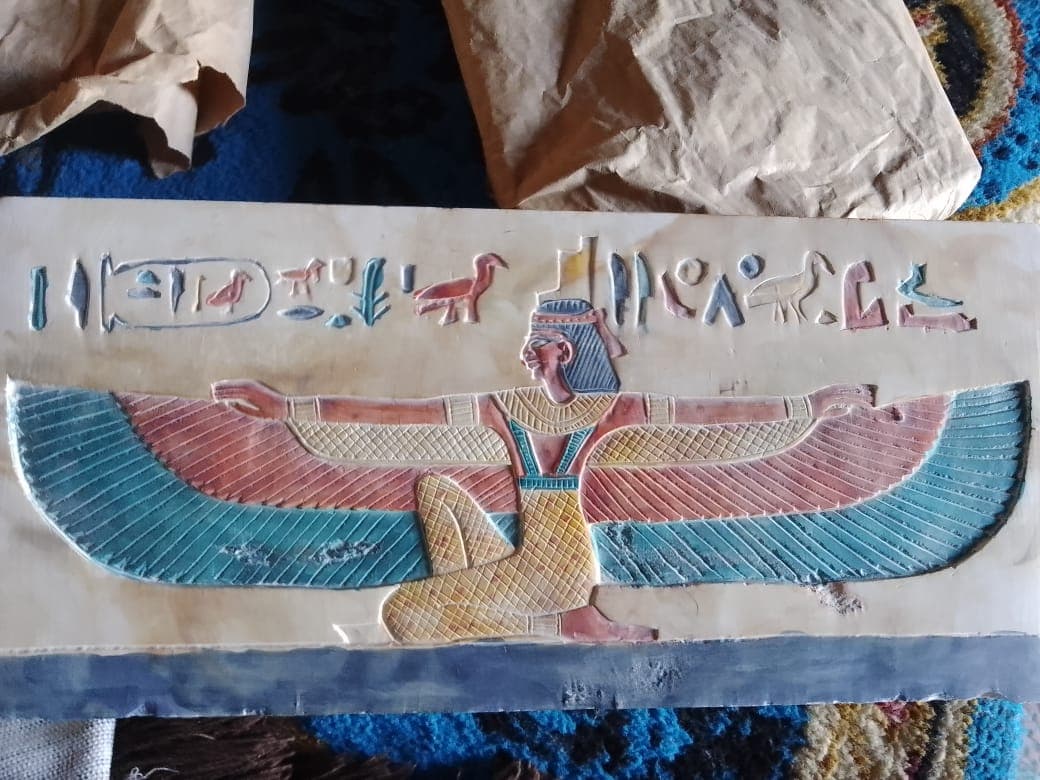
Predynastic & Ancient Egypt (5000 BCE – 30 BCE)
Objects were already being masterfully shaped from calcite alabaster during Egypt's Predynastic period, an artistic dedication that continued seamlessly throughout the pharaonic kingdoms and long thereafter.
The stone held an elevated position within society due to both its physical properties and deep cosmological symbolism. Its highly polished, pale luminous surface represented absolute purity and divine association, making it the perfect medium for everyday ceremonial vessels and monumental architecture alike.
The Etymology: The Name Itself May Be Egyptian
The origins of the stone's name tell a circular historical story. The ancient Greek word 'alabastrites' is recorded as being directly derived from the historical town of Alabastron in Egypt, near the region where the mineral was natively quarried.
Furthermore, 'Oriental' calcite alabaster was highly esteemed across the Mediterranean for making small, handles-free perfume bottles or ointment vases known as 'alabastra'. Many language historians suggest that the vessel's original shape name may have ultimately gifted the mineral its global linguistic identity.
The Hatnub Quarries—Egypt's Most Sacred Stone Source
Hatnub is the Ancient Egyptian name for a legendary quarry region tucked in the Eastern Desert, situated just under 20 kilometers southeast of the Amarna archaeological site. The ancient Egyptians considered this isolated sector the absolute source for the highest grade calcite in existence, naming the quarry 'Hwt-nbw'—the 'Mansion of Gold'—to honor the glowing, honey-golden white stone pulled from its depths.
Pottery fragments, hieroglyphic rock inscriptions, and hieratic graffiti confirm that Hatnub was worked intermittently from at least as early as the reign of Khufu all the way through to the Roman period (c. 2589 BCE – 300 CE). This means the exact same subterranean quarry system served Egyptian stone carvers for nearly 2,900 years.
The prestige of the site is recorded directly on the surrounding landscape. Inscriptions from Dynasty VI kings Teti and Pepi I are permanently carved into the rock walls. Additionally, the historic Dynasty XII tomb of Nomarch Djutihotep preserves an incredible wall depiction showing 172 men using sophisticated ramp and rope engineering to drag a colossal, single-block alabaster statue standing over 6.5 meters high out of the Hatnub desert floor.
Sacred, Funerary, and Canopic Masterpieces
Because of its color and durability, alabaster was regarded as a pure stone, reserving it for temple chapels, sacred pavements, altars, and royal sarcophagi. This is seen clearly in ancient Egyptian funerary engineering.
The earliest clear alabaster canopic containers date back to the Fourth Dynasty (ca. 2649–2609 BCE), where a solid chest split into four compartments was provided for Queen Hetepheres I (wife of Sneferu), carefully designed to preserve internal organs within a protective natron solution.
By the New Kingdom, canopic jars became significantly taller, showcasing highly elegant proportions often accented with faience or rare gold inlays. Tutankhamun’s famous tomb contained a magnificent gilded canopic shrine housing a central alabaster chest with four independent compartments, each meticulously sealed with an unblemished lid carved directly in the young king's likeness.
The Sarcophagus of Seti I
Seti I was buried within a magnificent single-block alabaster sarcophagus, widely considered by modern historians to be one of the absolute pinnacles of New Kingdom masonry. Carved from a singular calcite boulder pulled from the Hatnub quarry, the container spans approximately 2.8 meters in length and 1.1 meters in width.
The translucent stone box is veined with shifting lines of white, ochre, and sienna. Its exterior surfaces are carefully carved with detailed hieroglyphic registers from the 'Book of Gates', mapping out the deceased pharaoh's nocturnal journey through the underworld (Duat) alongside the sun god Ra.
To emphasize the text, the raw white engravings were historically inlaid with a bright blue copper sulfate compound. In 1824, the British Museum infamously turned down the opportunity to purchase the artifact for £2,000. It was quickly acquired by the visionary architect Sir John Soane for his private London collection, where it stands beautifully illuminated to this day.
Mesopotamia and the Great Assyrian Palace Reliefs
Moving into the 9th through 7th centuries BCE, civilization in Mesopotamia utilized a regional variety of gypsum alabaster known commonly as 'Mosul marble', found abundantly in the northern landscapes of modern-day Iraq.
This mineral became the defining medium for the iconic Assyrian palace reliefs. Master carvers lined massive imperial state rooms with continuous, interconnected compositions carved onto stone slabs standing around 7 feet high, creating the largest unified series of alabaster sculptures ever produced in antiquity.
Classical Antiquity & The Etruscans
By the 3rd century BCE, the Etruscans had begun utilizing natural deposits located around Volterra in modern-day Tuscany to produce highly detailed, low-relief funerary urns, an artistic trade likely introduced to the region by traveling Greek artists.
Simultaneously, Roman builders discovered that when alabaster was cut into incredibly thin sheets, its natural translucency allowed it to function as a window medium. Romans integrated thin alabaster panes into premium bathhouses, allowing warm, diffused natural light to illuminate the interior while maintaining absolute privacy from the outside world.
Medieval Europe and the Nottingham Export Industry
During the 14th and 15th centuries, gypsum alabaster carving evolved into a massive localized industrial sector across Nottingham, England. Artisans turned out thousands of small religious statues and detailed relief panels intended for church altarpieces, creating a highly successful European export trade.
The material's natural softness made it incredibly popular for sculpting full, life-size recumbent effigies on noble tomb monuments; the horizontal resting position perfectly accommodated the stone's low tensile strength, and it was substantially easier to work with than imported marble. While the English Reformation brought an abrupt end to the production of religious altarpieces, the market for funerary monuments continued to thrive for generations.
The Italian Renaissance Revival in Volterra
Following centuries of dormancy after the collapse of the Roman Empire, the alabaster workshops of Volterra experienced an artistic renaissance in the mid-16th century. Historical documents record that Francesco de' Medici, Grand Duke of Tuscany, acquired an intricately lathe-turned alabaster vase from a Volterran master craftsman to present as an elite diplomatic gift to the Duke of Bavaria.
By the 18th century, this local network expanded into a structured industry specializing in reproducing classical Greco-Roman sculptures, spreading the fame of Tuscan alabaster across global trade routes.
The Art Deco Movement (1920s)
The global alabaster industry experienced a massive modern surge during the 1920s with the birth of Art Deco design. Innovative interior designers realized that the stone's natural ability to diffuse light made it the ultimate medium for crafting geometric ceiling basins and streamlined wall sconces.
This styling movement culminated in major showcases at the iconic 1925 International Exposition of Modern Industrial and Decorative Arts in Paris, cementing alabaster’s transition from an ancient spiritual medium to a permanent staple of luxury contemporary architecture.