CLEANING & CARING FOR TRANSLUCENT ALABASTER LIGHTING
An authentic alabaster lighting fixture is an investment meant to endure for generations, but maintaining its signature translucent beauty requires specialized knowledge. Because alabaster is a delicate mineral rather than a dense rock, common household cleaning routines can cause permanent structural damage. To protect your stone from turning cloudy or brittle, follow this expert maintenance guide.
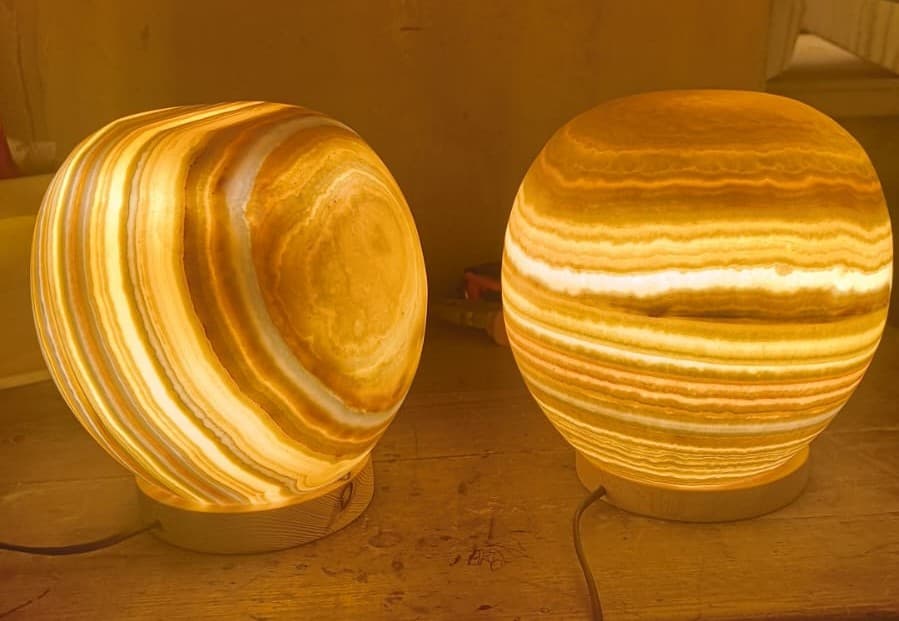
The Golden Rule: Keep Water Away
The number one rule of alabaster conservation is absolute moisture control. Alabaster is a porous, slightly water-soluble mineral. Unlike marble, which can be wiped down with a damp cloth and mild liquid detergent, standing water or liquid sprays can slowly dissolve the polished exterior layer of alabaster.
When liquid moisture penetrates the porous crystalline structure, it causes a chemical reaction that can permanently turn the luminous, translucent stone into a dull, chalky, and completely opaque white surface.
The Professional Cleaning Protocol
To keep your pieces immaculate without risking surface damage, avoid the all-purpose chemical cleaner aisle entirely. For standard maintenance, dust the surfaces of your lamps or bowls using a dry, clean microfiber cloth.
If your fixture features deep, hand-chiseled channels or intricate relief patterns, use a dry, soft-bristled artist's brush to gently sweep away trapped atmospheric dust without applying rough physical pressure.
Removing Stubborn Stains Safely
Because alabaster acts like a natural sponge, it can occasionally absorb grease, soot, or environmental oils that regular dry dusting cannot clear. In these instances, professional conservators rely on pure organic solvents rather than water-based soaps.
Moisten a clean cotton swab or soft cloth with a small amount of pure acetone or mineral spirits, and gently pass it across the affected area. Always work the cloth smoothly in the direct path of the stone's natural mineral grain. These solvents will lift deep grime and rapidly evaporate away before the stone can absorb moisture or lose its polish.
Managing Heat Sensitivity with Modern LEDs
Alabaster is structurally sensitive to thermal changes. High operational heat can dehydrate the mineral's internal crystal matrix, accelerating moisture loss and causing the stone to become dangerously brittle or lose its translucent depth over time.
Because of this, you should exclusively use premium LED bulbs inside all alabaster lamps and sconces. LEDs emit minimal heat, keeping the interior chamber cool and perfectly preserving the stone's natural moisture balance indefinitely.
The Protective Rule of White Cotton Gloves
Whenever you need to install, adjust, or deep-clean an alabaster lighting fixture, make it a habit to wear clean, white cotton gloves. The natural oils present on human fingertips are slightly acidic.
When you touch raw or lightly sealed porous stone with bare skin, you leave behind invisible oily prints. Over months and years, these acidic spots chemically bind with ambient dust particles, leaving dark, irreversible smudges directly on the stone's surface.
The Definitive Checklist of What to Avoid
Never use household vinegar, lemon juice, or acidic cleansers—they will instantly etch the calcium carbonate surface permanently.
Never utilize abrasive scrub pads, wire brushes, or harsh polishing powders that will scratch the delicate surface.
Never position your pieces in areas exposed to prolonged, direct afternoon sunlight, which induces permanent yellowing and internal dehydration.
Never install true alabaster fixtures in exterior outdoor environments. Its chemical solubility under rainfall renders it entirely inapplicable to outdoor installations.