ALABASTER VS. MARBLE VS. ONYX: THE COMPLETE STONE COMPARISON
When designing high-end spaces, selecting the correct natural stone is essential to balancing visual beauty with structural longevity. Alabaster, marble, and onyx are frequently grouped together in conversations about luxury interior design, yet they are geologically distinct, possess entirely different durability profiles, and serve contrasting design purposes. Let's break down the exact technical differences so you can select the perfect material for your space.
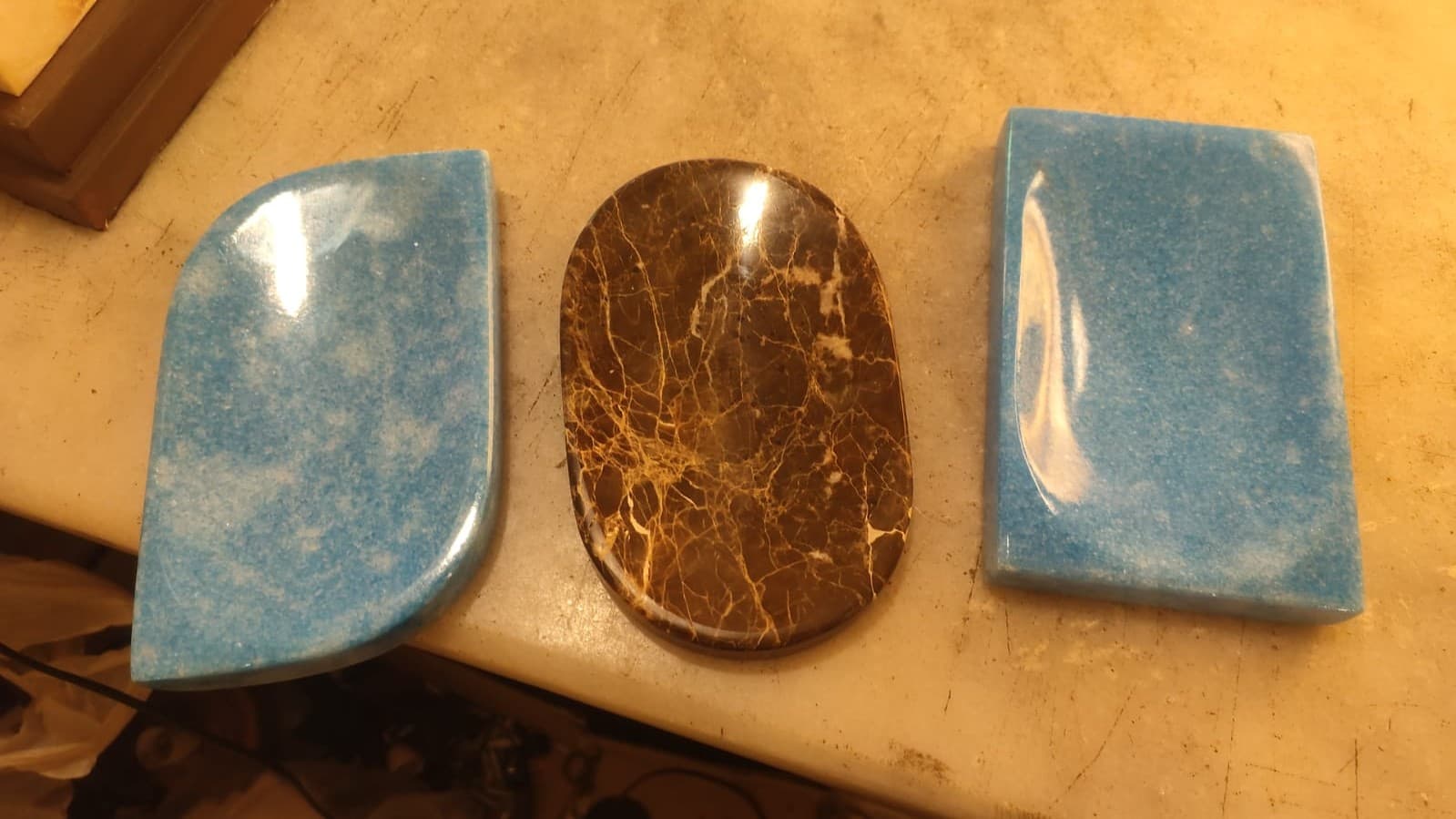
Alabaster vs. Marble: Translucency vs. Structure
The most critical difference between alabaster and marble is how they interact with light. Alabaster is highly translucent, functioning as a natural filter that can transmit up to 80% of light through its crystalline mineral matrix. Marble, by contrast, is completely opaque, bouncing light off its surface rather than allowing it to penetrate through.
Geologically, their chemical compositions are entirely distinct. True marble is a metamorphic rock composed of highly compressed calcium carbonate, making it much denser and harder, sitting at a 3 to 5 on the Mohs scale. Alabaster (whether gypsum or calcite based) is a much softer sedimentary stone, ranking between 1.5 and 3.
Because of these properties, their ideal use cases are entirely different: marble is built to withstand high-traffic structural wear like flooring, heavy countertops, and exterior building facades. Alabaster excels exclusively within interior environments, prioritizing lighting fixtures, decorative panels, and fine standalone sculptures where intricate hand-carved detail and translucency are the primary goals.
Alabaster vs. Onyx: The Great Industry Terminology Trap
The relationship between alabaster and onyx contains a major commercial terminology trap. Many large, variegated stone slabs sold across the modern dimension stone and remodeling industries under the label 'onyx' are actually geologically classified as banded calcitic alabaster.
True mineralogical onyx is an incredibly dense, hard variety of layered chalcedony (a quartz mineral) that carries a Mohs rating of 6.5 to 7. True onyx is exceptionally durable and scratch-resistant, whereas true alabaster remains comparatively soft and delicate.
When comparing their visual impact, alabaster stands out for its soft, even, and highly uniform light transmission, making it perfect for creating a warm, elegant, and understated environment. Onyx features heavy, high-contrast mineral bands and dramatic color shifts, making it the preferred choice for bold, high-impact backlit architectural installations.